
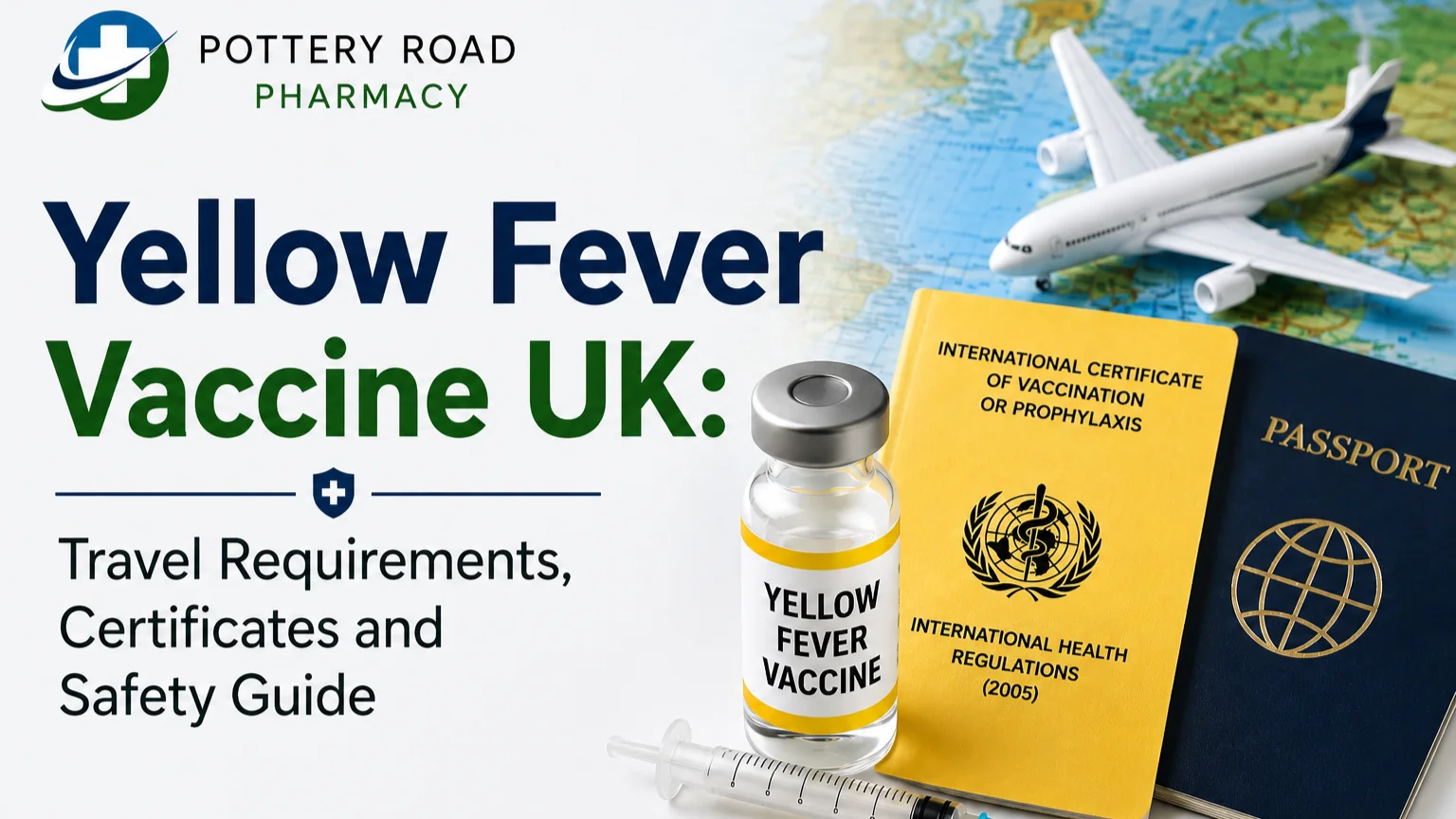
Yellow fever is a serious viral illness spread by infected mosquitoes in parts of Africa and South America. Most UK travellers don’t need to think about it day to day, but if your trip takes you to or through a risk country, vaccination can become essential — not just for your health, but for entry into your destination. Some countries won’t let you cross the border without proof of vaccination, and requirements often depend on your full itinerary, not just your final stop. Before you book flights, it’s worth checking exactly what your destination expects, because getting this wrong can mean real problems at the airport.
What Is Yellow Fever?
Yellow fever is a viral infection found in tropical regions of sub-Saharan Africa and parts of South America. Most people who catch it experience a short, flu-like illness with fever, headache, and muscle pain, but a minority go on to develop a much more severe form involving liver damage, bleeding, and jaundice — the “yellow” in the name refers to the jaundice that can develop in serious cases. There’s no specific antiviral treatment for yellow fever, which is exactly why vaccination is the main line of defence.
How yellow fever spreads
The virus is transmitted through the bite of infected Aedes or Haemagogus mosquitoes, which are active mainly during the day. It isn’t passed directly from person to person. Because these mosquitoes thrive in forested and urban areas across the yellow fever belt, both rural adventure travel and city stays in affected countries can carry a risk, depending on the season and location.
Why travellers should take it seriously
Symptoms typically start within a week of a bite, and severe cases can be life-threatening, with no cure once the illness takes hold. Beyond the personal health risk, unvaccinated travellers can also become unwitting carriers, which is part of why so many countries enforce entry rules around proof of vaccination — it protects the traveller and helps prevent onward spread of the virus.
Who Needs the Yellow Fever Vaccine?
Not every traveller needs this vaccine — it depends entirely on where you’re going, how you’re getting there, and sometimes where you’ve already been.
Countries where vaccination may be recommended
Yellow fever vaccination is generally recommended for travellers heading to areas of sub-Saharan Africa and tropical South America where the virus circulates, even if that country doesn’t formally require a certificate for entry. In these cases, vaccination is about personal protection rather than paperwork, since the underlying disease risk is real regardless of border rules.
Countries that require proof
A separate group of countries make vaccination a legal condition of entry. Some nations require every traveller to show a valid certificate on arrival, while others only ask for one if you’re arriving from — or have transited through — a country where yellow fever is present. This “arriving from a risk area” rule catches people out more than any other part of the process, because a long layover in a risk-zone airport can trigger the requirement even if you never left the terminal.
Do I Need a Yellow Fever Certificate?
Do I need a yellow fever certificate? You’ll need one if your destination country makes it a condition of entry, or if you’re transiting through or arriving from a country where yellow fever is present and your next stop requires proof. If neither applies, a certificate isn’t mandatory — though vaccination may still be sensible for your own protection.
What is an ICVP?
The International Certificate of Vaccination or Prophylaxis, often called the “yellow card,” is the official document confirming you’ve been vaccinated. It’s issued at the time of your vaccination and is recognised under the International Health Regulations that govern how countries manage the cross-border spread of certain diseases. Since 2016, a single dose has been considered to give lifelong protection for most people, so current certificates are valid for life — including older certificates that show a now-defunct expiry date.
When may proof be requested?
Proof is usually checked at immigration on arrival, though it can also be requested before you’re allowed to board a connecting flight. Border officials can refuse entry, issue fines, or in some cases place travellers in quarantine if a required certificate can’t be produced, so it’s not a formality worth skipping. Requirements are reviewed and updated regularly by the World Health Organization, so it’s worth checking the current position for your specific route close to your travel date rather than relying on what a previous trip required.
When Should You Get the Yellow Fever Vaccine?
Timing matters more with this vaccine than with most other travel jabs, largely because of how certification works.
Planning before international travel
The certificate only becomes legally valid 10 days after vaccination, which is also roughly how long it takes your immune system to build protection. That means a same-week vaccination won’t count if you’re travelling to a country that checks certificates on arrival. Travel health services generally recommend booking your appointment six to eight weeks before departure, which leaves room for the 10-day rule plus time to fit in any other travel vaccines you might need for the same trip.
What if you are travelling soon?
If your trip is close and you haven’t been vaccinated yet, don’t panic — but do get in touch with a registered centre as soon as possible. Even a vaccination given only just over 10 days before arrival can still satisfy certificate requirements, and a pharmacist can also advise on emergency options, such as an exemption letter, if there’s a genuine medical reason you can’t have the vaccine at all.
Is the Yellow Fever Vaccine Safe?
The yellow fever vaccine has a long track record and is generally well tolerated, but it’s a live vaccine, which means it isn’t suitable for everyone.
Common side effects
Most people experience only mild reactions, such as soreness at the injection site, a headache, or a low-grade fever for a day or two afterwards. Serious reactions are rare, and the vaccine has an established safety profile built up over decades of international use.
When medical advice is particularly important
Because it’s a live vaccine, it isn’t given during pregnancy, to people with significantly weakened immune systems, to infants under a certain age, or to anyone with a severe egg allergy, among other contraindications. People over 60 travelling somewhere the vaccine isn’t strongly recommended, and anyone with a close relative who’s had a severe reaction to it, should also discuss the risks and benefits with a clinician before deciding. If a contraindication applies to you, a travel health professional can talk through whether a medical exemption letter is appropriate for your destination.
What Happens During a Travel Vaccination Consultation?
A yellow fever consultation typically starts with a review of your itinerary, medical history, and any allergies, so the clinician can confirm the vaccine is appropriate and check whether your destination requires a certificate at all. If you go ahead, the vaccine is given as a single injection, and you’ll usually be asked to wait briefly afterwards in case of any immediate reaction. Your International Certificate of Vaccination or Prophylaxis is then completed and signed on the spot, recording the vaccine batch, date, and administering clinician, so you leave with the paperwork you need in hand.
How to Prepare for Your Appointment
Bring your passport, since the details on your certificate need to match it exactly, along with a note of every country and transit point on your itinerary. If you’ve had a yellow fever vaccine before, bring any old certificate or vaccination record with you, as this can affect whether revaccination is needed. It’s also worth listing any allergies, current medications, and relevant health conditions in advance, and mentioning if you’re pregnant or breastfeeding, so the consultation can move efficiently and safely.
Yellow Fever Travel Checklist
- Check whether your destination — and any transit countries — requires proof of yellow fever vaccination.
- Book your appointment at least 10 days before travel, ideally 6–8 weeks ahead.
- Bring your passport and any previous vaccination records to your appointment.
- Keep your ICVP certificate together with your passport while travelling.
- Reconfirm requirements close to your departure date, since rules can change.
- Ask about other travel vaccines and antimalarial advice for the same trip.
You may need yellow fever vaccination if:
- Your destination has yellow fever transmission.
- Your itinerary creates exposure risk.
- Your destination requires proof of vaccination.
- You are entering a country from a yellow fever risk area.
Frequently Asked Questions
Is yellow fever vaccination required for every traveller?
No. It depends entirely on your destination and route. Some countries require it of all arrivals, others only if you’re coming from a risk area, and many don’t require it at all — though it may still be recommended for personal protection.
Do I need a certificate after vaccination?
You’ll be issued an International Certificate of Vaccination or Prophylaxis at the time of vaccination. Whether you need to present it depends on your destination’s entry rules.
Can I travel without a yellow fever certificate?
If your destination doesn’t require one, yes. If it does, travelling without it can mean being refused entry, fined, or held at the border, so it’s not worth the risk.
How long does the yellow fever vaccine take to work?
The certificate becomes valid 10 days after vaccination, which reflects the time needed to build protective immunity.
Can children have the yellow fever vaccine?
It can be given to most children over a certain age, but infants and very young children may need to avoid it. A travel health clinician can advise based on your child’s age and the specific requirements of your trip.
Planning a Trip Abroad?
If you’re heading somewhere that needs yellow fever vaccination — or you’re simply not sure whether it applies to your trip — it’s worth getting clarity well before you book anything non-refundable. Book a travel vaccination consultation at Pottery Road Pharmacy in Reading, where our team can confirm your destination’s requirements, administer the vaccine if appropriate, and issue your ICVP on the spot. While you’re there, it’s also a good opportunity to check what other travel vaccinations or general travel health advice might apply to your itinerary.
Related reading: Travel Clinic services · Travel Vaccination service · General Travel Health guide