
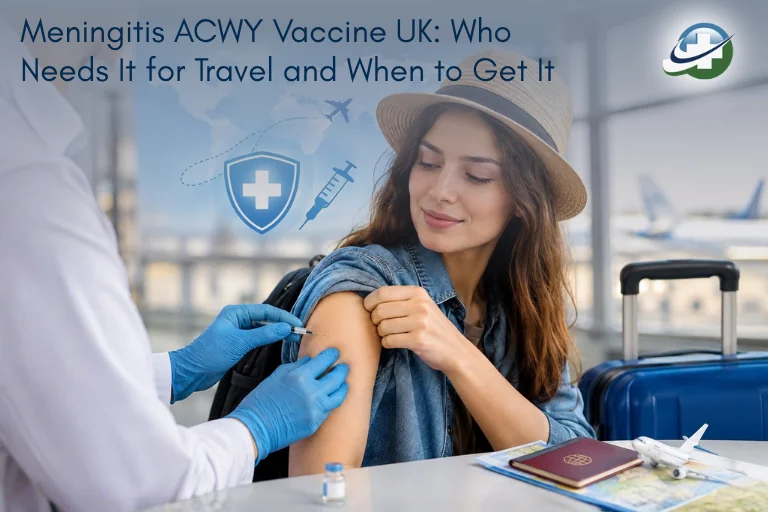
Planning international travel involves a long checklist — flights, accommodation, visas — and vaccinations can easily get left until the last minute. For certain destinations, though, proof of meningitis ACWY vaccination isn’t just a good idea, it’s a formal entry requirement. Understanding who needs the MenACWY vaccine, when to get it, and how it fits into your wider travel plans can save you from a stressful scramble before departure.
What Is the MenACWY Vaccine?
The MenACWY vaccine is a single injection that protects against four groups of meningococcal bacteria. It’s part of the UK’s routine immunisation programme for teenagers, but many adults — particularly those travelling to certain regions — also need it, either because they missed it at school or because their destination specifically calls for it.
What diseases does it protect against?
Meningococcal bacteria can cause meningitis (inflammation of the membranes surrounding the brain and spinal cord) and septicaemia (blood poisoning), both of which can develop very quickly and become serious. MenACWY protects specifically against four of the several known groups of meningococcal bacteria responsible for these infections.
What does ACWY mean?
The letters A, C, W and Y refer to the four different groups of meningococcal bacteria the vaccine targets. Each group can cause the same types of illness, but their prevalence varies by region — which is exactly why certain travel destinations, where these strains are more common, place particular importance on vaccination before entry.
Who May Need MenACWY Vaccination?
Travel-related recommendations
MenACWY is routinely recommended for travellers heading to parts of the world where these strains are more common, including areas of sub-Saharan Africa known as the “meningitis belt”, where risk is often higher during the dry season. It’s also strongly advised – and in the case of Saudi Arabia, formally required – for anyone undertaking Hajj or Umrah, as proof of recent MenACWY vaccination is typically a condition of the visa application.
Beyond these specific regions, anyone travelling somewhere with a higher reported incidence of meningococcal disease, or planning an extended stay involving close contact with local communities, may be advised to get vaccinated as a precaution.
Other situations where vaccination may be advised
Outside of travel, MenACWY is also part of the routine NHS schedule for teenagers, usually offered around Year 9, and is available as a catch-up vaccine for young people up to age 25 who missed their school dose — including those heading off to university, where living in shared halls of residence can increase the risk of exposure. People with certain underlying health conditions that affect immune function may also be advised to get vaccinated regardless of travel plans.
When Should You Get the MenACWY Vaccine?
Timing matters. The vaccine doesn’t provide immediate protection — it typically takes a couple of weeks for full immunity to develop, so it’s best to get vaccinated well ahead of departure rather than in the final days before a trip. For Hajj and Umrah pilgrims specifically, Saudi authorities generally require the vaccine to have been administered within a set window before travel and not too close to your departure date, so it’s worth checking current requirements as part of your visa preparation.
As a general rule of thumb, booking your vaccination appointment four to six weeks before you travel gives enough of a buffer for the vaccine to take effect and for any necessary documentation to be issued in time.
Is MenACWY Required for Travel?
Requirements vary considerably by destination. For pilgrims travelling to Saudi Arabia for Hajj or Umrah, proof of MenACWY vaccination is a standard part of the visa application process. For many other destinations, particularly across the meningitis belt of sub-Saharan Africa, the vaccine is strongly recommended rather than formally mandated, though this can change depending on current health advisories and the specific countries on your itinerary.
Because entry requirements can be updated, it’s always worth confirming the latest guidance for your specific destination with a travel health professional rather than relying solely on general information, especially if you’re travelling during a period of heightened regional risk.
What Happens During Vaccination?
A MenACWY appointment is usually straightforward. You’ll typically be asked a few questions about your medical history, any allergies, and your travel plans, so the person vaccinating you can confirm the vaccine is appropriate for your circumstances and timed correctly for your trip. The vaccine itself is given as a single injection, usually into the upper arm, and the appointment is generally quick.
If you’re eligible through the NHS — for example, as a teenager who missed the school programme or a young person heading to university for the first time this can often be arranged through your GP. For travel-related vaccination outside NHS eligibility, a travel health clinic or pharmacy offering travel vaccination services is usually the most convenient route.
Side Effects and Safety
Like most vaccines, MenACWY can cause mild, short-lived side effects for some people, such as soreness or redness at the injection site, mild fatigue, or a slight headache in the day or two afterwards. Serious reactions are rare. As with any vaccination, it’s worth mentioning any known allergies or previous reactions to vaccines when you book your appointment, so the healthcare professional can advise you appropriately.
This article is intended for general information only and doesn’t replace personalised medical advice. If you have specific health conditions, allergies, or concerns, it’s important to discuss these with a healthcare professional before vaccination.
Travel Planning Checklist
- Check whether your destination has specific MenACWY entry requirements, particularly for Hajj, Umrah, or travel across the African meningitis belt
- Book your vaccination appointment at least four to six weeks before departure
- Bring proof of previous vaccinations if you have them, to avoid unnecessary repeat doses
- Ask about a vaccination certificate if your destination requires documented proof
- Discuss any allergies or medical conditions with your travel health professional beforehand
- Review your wider travel vaccination needs at the same appointment, since other vaccines may also be recommended for your destination
Frequently Asked Questions
Who needs MenACWY?
Anyone travelling to regions with higher rates of meningococcal disease, including parts of sub-Saharan Africa, and anyone undertaking Hajj or Umrah, may need MenACWY. It’s also routinely offered to UK teenagers and available as a catch-up vaccine for young people up to 25, particularly those starting university.
Is MenACWY required for travel?
Requirements depend on your destination. It’s a formal entry condition for Hajj and Umrah pilgrims travelling to Saudi Arabia, and strongly recommended for travel across the African meningitis belt. Always check current guidance for your specific destination.
How long before travel should I get vaccinated?
It’s best to get vaccinated at least four to six weeks before you travel, since full immunity takes some time to develop and certain destinations require the vaccine to have been given within a specific window before arrival.
How long does MenACWY vaccination last?
Protection from MenACWY is generally considered long-lasting, and a booster isn’t usually required for most people, though your travel health professional can advise if a repeat dose is appropriate based on your individual circumstances and previous vaccination history.
Who should get the meningitis vaccine?
Teenagers as part of the routine NHS schedule, young adults who missed their school dose, university entrants living in shared accommodation, and travellers heading to higher-risk regions or undertaking Hajj or Umrah are all commonly advised to get vaccinated.
Can adults get MenACWY?
Yes. While MenACWY is routinely offered to teenagers, adults can and often do receive it, particularly ahead of travel to regions where it’s recommended or required, or as a catch-up dose if they missed it earlier in life.
Is MenACWY safe?
MenACWY is generally considered safe, with most people experiencing only mild, short-lived side effects such as soreness at the injection site. As with any vaccine, it’s worth discussing your individual health history with a healthcare professional beforehand.
Whether you’re heading off on Hajj, planning a trip across sub-Saharan Africa, or simply making sure your vaccinations are up to date before travelling, our travel health team can talk you through exactly what you need and when. If you’re based in and around Reading and Berkshire, our local travel clinic can fit your MenACWY vaccination around your departure date and cover any other travel health needs at the same appointment.
Book a travel vaccination consultation.