
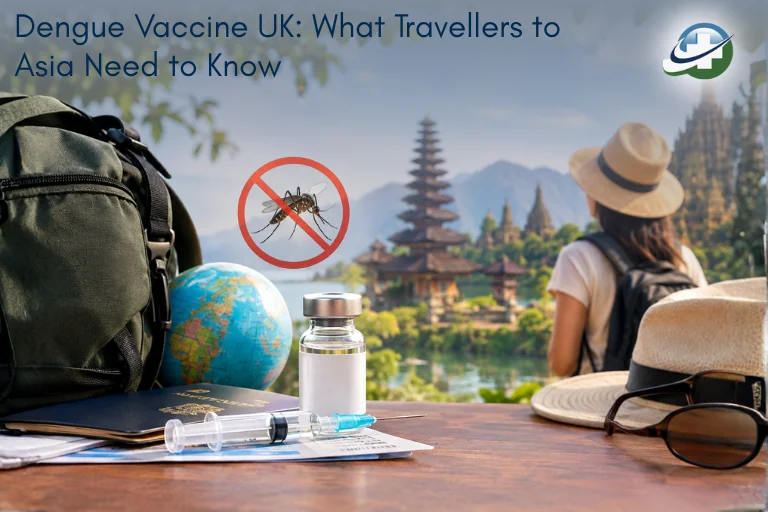
If you’re travelling to Southeast Asia, South Asia, or Latin America, the dengue vaccine may be worth discussing with a travel health professional particularly if you’re visiting for an extended stay, travelling during rainy season, or returning to a region you’ve visited before. Whether you need it depends on your destination, itinerary, and personal health history.
Pottery Road Pharmacy’s travel clinic in Reading helps travellers assess their individual dengue risk before departure, alongside other essential pre-travel health checks.
What Is Dengue Fever and Why Does It Matter for Travellers?
Dengue fever is a mosquito-borne viral infection spread primarily by the Aedes aegypti and Aedes albopictus mosquitoes. These mosquitoes are most active during the day, which makes standard bite-prevention advice (like avoiding dusk and dawn only) less effective against dengue than it is against other mosquito-borne diseases.
Most dengue infections cause mild to moderate symptoms fever, headache, joint and muscle pain, and rash that resolve within a week or two. However, a small proportion of cases progress to severe dengue, which can be serious and requires prompt medical attention. Severe dengue is more common in people who have had a previous dengue infection.
For travellers, dengue matters because:
- It is one of the fastest-growing mosquito-borne diseases globally, with cases rising in both traditional risk areas and some previously low-risk regions
- Unlike malaria, there is no widely used preventive medication prevention relies on avoiding bites and, for some travellers, vaccination
- Outbreaks can occur seasonally and are difficult to predict from year to year
This is why dengue is increasingly featured alongside other essentials in a proper pre-travel health check, rather than treated as an afterthought.
Who Should Consider the Dengue Vaccine?
The dengue vaccine isn’t recommended for every traveller. It’s generally most relevant for:
- Travellers who have previously had dengue fever since a second infection can carry a higher risk of severe illness, vaccination may offer added protection
- Frequent or long-stay travellers to high-risk regions, including those working, volunteering, or studying abroad for extended periods
- People visiting friends and relatives in dengue-endemic countries, who often stay longer and in areas with more mosquito exposure than typical tourist accommodation
- Travellers heading to regions during peak transmission season, typically during and after the rainy season in many tropical countries
A travel health consultation can help determine whether vaccination is appropriate based on your destination, trip length, accommodation type, planned activities, and any previous dengue infection. You can find full details on eligibility and what’s involved on our dengue vaccine page.
Where Is Dengue Risk Highest?
Dengue is present in more than 100 countries, with the highest transmission rates concentrated in tropical and subtropical regions. Risk is generally highest in Southeast Asia and South Asia, followed by parts of Latin America and the Caribbean, with lower but growing risk in parts of Africa and southern Europe. Urban and semi-urban areas with standing water — even in well-developed tourist zones tend to carry more risk than rural areas, since the mosquitoes that spread dengue breed in small amounts of stagnant water close to human dwellings.
Popular Destinations With Dengue Activity
Travellers heading to the following destinations should factor dengue into their pre-travel planning:
- Southeast Asia: Thailand, Vietnam, Indonesia (including Bali), the Philippines, Cambodia, and Malaysia
- South Asia: India, Sri Lanka, and Bangladesh
- Latin America and the Caribbean: Brazil, Mexico, Colombia, and several Caribbean islands
- Other regions: Parts of Africa and, increasingly, southern Europe, where local transmission has been reported in recent years
Risk levels can shift year to year depending on local outbreaks, rainfall patterns, and mosquito activity, so it’s worth checking current advice close to your travel dates rather than relying on general destination reputation alone.
How the Dengue Vaccine Works Alongside Bite Prevention
Vaccination is not a replacement for bite prevention the two work best together.
How the vaccine helps: The dengue vaccine works by prompting the immune system to recognise and respond to the dengue virus, reducing the likelihood of infection and, importantly, lowering the risk of severe disease if infection does occur.
Why bite prevention still matters: Because the vaccine may not be suitable for everyone, and no vaccine offers complete protection, daytime mosquito bite prevention remains essential. This includes:
- Using DEET-based or equivalent insect repellent, reapplied regularly
- Wearing long sleeves and trousers, particularly during daylight hours
- Using air conditioning or window/door screens where possible
- Sleeping under treated mosquito nets in areas without reliable screening
Travellers should think of vaccination and bite prevention as complementary layers of protection rather than alternatives to one another. If dengue is just one of several vaccines on your pre-trip list, our guide on which travel vaccines you need for summer holidays is a useful next read.
When to Book Before You Travel
Timing matters for dengue vaccination, as with most travel vaccines. Book a travel health consultation as early as possible in your trip planning ideally at least 4 to 6 weeks before departure to allow enough time to:
- Assess whether the vaccine is appropriate for your specific circumstances
- Complete the full dosing schedule if more than one dose is required
- Address any other travel vaccinations or health precautions your itinerary may need
If you’re travelling at short notice, it’s still worth contacting a healthcare professional, as some protective measures and guidance can be arranged even close to departure.
Frequently Asked Questions
Is there a vaccine that fully prevents dengue fever?
No vaccine offers 100% protection against dengue. The vaccine reduces the risk of infection and, particularly for those who’ve had dengue before, lowers the risk of severe disease. Bite prevention remains an essential part of protection.
How soon before travel should I get the dengue vaccine?
Ideally, book a consultation at least 4 to 6 weeks before departure to allow time for any required dosing schedule and to discuss whether the vaccine is suitable for you.
Can I get dengue more than once?
Yes. There are several dengue virus strains, and a person can be infected more than once. A second infection with a different strain can carry a higher risk of severe illness, which is why previous infection is often a key factor in vaccine recommendations.
Do I still need mosquito repellent if I am vaccinated?
Yes. Vaccination reduces risk but doesn’t eliminate it. Daytime mosquito bite prevention repellent, covering up, and using nets or screens should continue regardless of vaccination status.
Prepare for Your Trip With Personalised Travel Health Advice
Dengue risk depends heavily on where you’re going, how long you’re staying, and your personal health history there’s no one-size-fits-all answer. At Pottery Road Pharmacy’s Reading travel clinic, our healthcare professionals can review your itinerary and travel history to advise on the dengue vaccine and any other vaccinations your trip may require.
Book a travel health consultation today to plan ahead for your trip to Asia, Latin America, or beyond.