
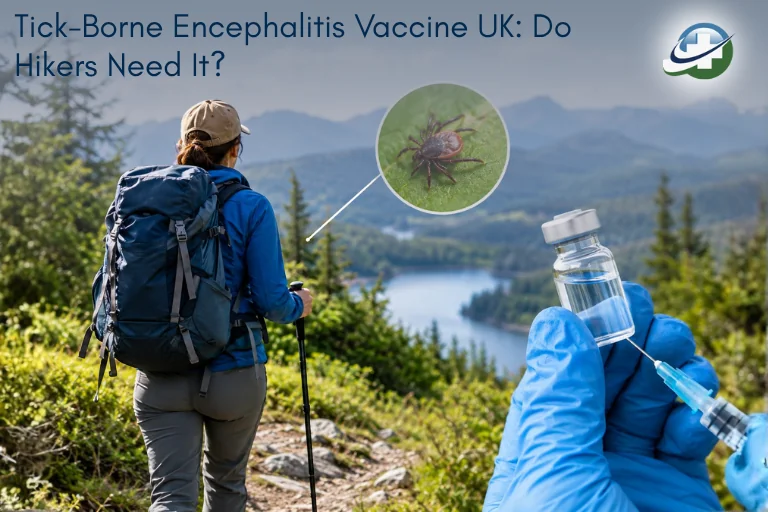
Yes, if you plan to hike, camp, or spend extended time outdoors in TBE-risk regions of Europe or Asia, the tick-borne encephalitis (TBE) vaccine is worth discussing with a travel health professional. Risk depends on where you’re going, the season, and how much time you’ll spend in forested or rural terrain not just whether you’re travelling at all.
For Reading residents with easy flight or rail access to the Alps, Scandinavia, and Central Europe, TBE is an increasingly relevant addition to pre-trip planning, particularly for anyone heading into forests, mountain trails, or rural farmland during spring and summer.
What Is Tick-Borne Encephalitis?
Tick-borne encephalitis is a viral infection spread through the bite of infected ticks, most commonly found in forested and rural areas across parts of Europe and Asia. The virus can also, less commonly, be transmitted through unpasteurised dairy products from infected animals in endemic regions.
Many infections cause mild, flu-like symptoms or none at all. However, in a proportion of cases particularly among older adults the infection can progress to a second, more serious phase affecting the central nervous system, causing symptoms such as severe headache, neck stiffness, confusion, or, in rare cases, longer-term neurological effects.
Geographic risk is concentrated in:
- Central Europe, including Austria, Germany, Switzerland, and the Czech Republic
- Scandinavia, particularly forested and coastal regions of Sweden, Norway, and Finland
- The Baltic states, including Estonia, Latvia, and Lithuania
- Parts of Eastern Europe and Russia, extending into parts of Northern Asia
Risk within these regions tends to be highest in forests, woodland edges, and areas with tall grass or dense vegetation, particularly between spring and autumn when tick activity peaks. A pre-travel consultation can help confirm whether your specific route or destination falls within an active risk area.
Who Should Get the TBE Vaccine?
TBE vaccination isn’t necessary for every trip to Europe it’s most relevant for travellers whose itinerary involves meaningful outdoor exposure in risk regions.
Hikers, Campers and Outdoor Workers
If your trip involves multi-day hiking, wild camping, trail running, or outdoor work such as forestry or farming, your exposure to tick habitats is significantly higher than that of a typical city-break traveller. Time spent off paved paths walking through long grass, brushing past vegetation, or resting directly on forest ground increases the likelihood of tick contact.
Travel to Forested and Rural Regions of Europe
Even travellers not specifically planning “outdoor activities” can be at risk if their trip includes rural accommodation, countryside day trips, or time in national parks during peak tick season (typically April to November, depending on the region). Longer stays and repeat visits to the same TBE-endemic area also increase cumulative risk over time.
How the TBE Vaccine Schedule Works
The TBE vaccine is typically given as a course of multiple doses, rather than a single injection, which makes early planning particularly important.
- First dose: Provides an initial immune response but doesn’t offer immediate full protection
- Second dose: Usually given 1 to 3 months after the first, providing solid short-term protection for a single trip
- Third dose: Given several months to a year later, extending protection for the longer term and future travel
For travellers with enough lead time, completing the full schedule before departure offers the most reliable protection. If your trip is coming up sooner, an accelerated schedule may be available in some cases this is worth discussing directly with a pharmacist, as suitability depends on individual health factors and departure timing.
Tick Bite Prevention Alongside Vaccination
Vaccination reduces the risk of serious illness from TBE specifically, but it doesn’t protect against other tick-borne conditions such as Lyme disease, so bite prevention remains essential regardless of vaccination status.
Practical prevention steps include:
- Wearing long trousers tucked into socks and long sleeves when walking through vegetation or forested terrain
- Using a tick and insect repellent on exposed skin and clothing
- Sticking to marked paths where possible and avoiding long grass or dense undergrowth
- Checking your whole body for ticks after outdoor activity, paying attention to warm, hidden areas like behind knees, underarms, and the scalp
- Removing any attached tick promptly and correctly, using fine-tipped tweezers close to the skin
If you do experience a bite that becomes red, swollen, or unusually painful after your trip, our guide on infected insect bite treatment covers what to look out for and when to seek advice.
Frequently Asked Questions
Is tick-borne encephalitis only a risk in forests?
Forests and woodland edges carry the highest risk, but ticks are also found in long grass, rural farmland, and some parks and gardens within endemic regions. Risk is more about vegetation type and tick habitat than forest cover alone.
How many doses of the TBE vaccine are needed?
The standard schedule involves three doses over several months to a year for longer-lasting protection, though a shortened two-dose schedule can offer short-term cover for travellers with less lead time before departure. A pharmacist can advise on the most suitable option for your trip.
Can you get TBE in the UK?
TBE is not considered a significant risk in the UK, though isolated cases linked to certain tick populations have been identified in parts of England in recent years. The primary risk for most UK residents remains travel to established endemic regions in Europe and Asia.
Does the TBE vaccine protect against Lyme disease too?
No. The TBE vaccine only protects against tick-borne encephalitis. Lyme disease is caused by a different organism (bacteria, not a virus) and currently has no vaccine available in the UK, so bite prevention remains the main defence against it.
Planning an Outdoor Trip? Check Your TBE Risk First
If your next trip involves hiking, camping, or extended time in forests or rural Europe, it’s worth checking whether tick-borne encephalitis vaccination applies to your itinerary particularly given the multi-dose schedule involved.
Book a pre-trip consultation with Pottery Road Pharmacy’s Reading travel clinic to check if your route calls for TBE vaccination.