
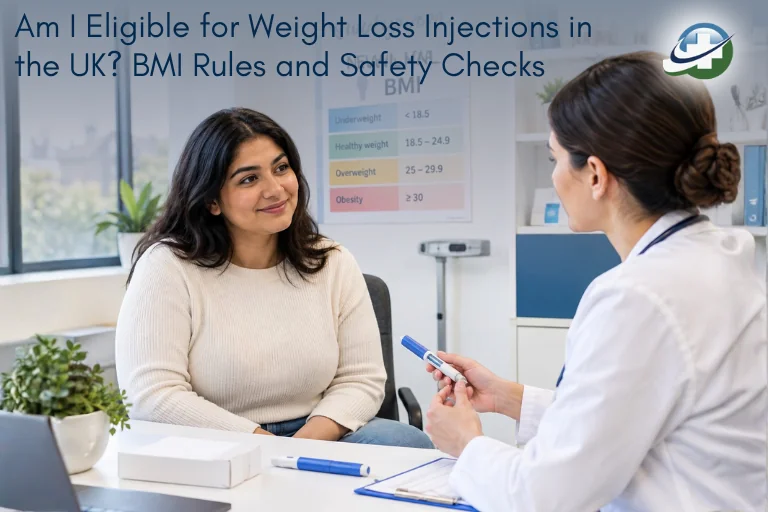
In the UK, the licences for weight loss injections such as Wegovy (semaglutide) and Mounjaro (tirzepatide) cover adults with a BMI of 30 or above, or a BMI of 27 or above with at least one weight-related health condition. NHS criteria are stricter. Either way, a clinical assessment by a prescriber is required, and some people, including those who are pregnant, are not suitable. Pottery Road Pharmacy can talk you through it.
This guide walks you through the checks in order, so you can see where you stand before you speak to anyone.
The short answer: who can be prescribed
Weight loss injection eligibility in the UK means an adult who meets the licensed BMI threshold, is prescribed the medicine alongside a reduced-calorie diet and more physical activity, and passes a clinical safety assessment by a prescriber. Meeting the BMI number alone is never enough.
The licensed thresholds for both medicines are:
| Your BMI | Weight-related condition needed? | Within the licence? |
| 30 or above | No | Yes, subject to assessment |
| 27 to 29.9 | Yes, at least one | Yes, subject to assessment |
| 27 to 29.9 | None | No |
| Below 27 | Any | No |
That answers the common question “can I get weight loss injections if I’m overweight but not obese?” Only if you’re at BMI 27 or above and have a weight-related condition. Thresholds can be adjusted for some ethnic backgrounds, as explained below.
Step 1: Check your BMI
Body mass index (BMI) is a ratio of your weight to your height. It’s a screening tool, not a verdict on your health, but it’s the first number any prescriber will ask for.
How to calculate your BMI
Divide your weight in kilograms by your height in metres squared. For example, someone weighing 95 kg who is 1.70 m tall has a BMI of 95 ÷ (1.70 × 1.70) = about 32.9. Online BMI calculators, including those on NHS pages, do the maths for you. A prescriber will usually want to confirm your height and weight rather than rely on estimates.
Ethnicity-adjusted considerations
Health risks linked to weight can start at lower BMI levels in some groups. NICE advises lowering BMI thresholds for people from South Asian, Chinese, other Asian, Middle Eastern, Black African or African-Caribbean backgrounds. If this applies to you, mention it, because it can affect how your BMI is interpreted. A prescriber will explain how it applies to you.
Step 2: Weight-related conditions that matter
If your BMI is between 27 and 29.9, a weight-related condition is what decides whether treatment is within the licence. Prescribers look at your medical history and, where needed, your records or recent test results.
Type 2 diabetes
Type 2 diabetes is a weight-related condition, and weight loss can matter for managing it. But if you have diabetes, tell the prescriber about every medicine you take. Some diabetes treatments, particularly insulin and sulfonylureas, can interact with these injections and may need adjusting to avoid low blood sugar. If you’re already on a diabetes treatment from your GP or diabetes team, keep them informed too.
High blood pressure
High blood pressure is another commonly recognised weight-related condition. Others can include high cholesterol, sleep apnoea and cardiovascular disease. You’ll be asked about conditions you have been diagnosed with, so having your diagnoses and current medicines to hand makes the conversation quicker.
NHS vs private criteria
The licence sets the outer limit for what can be prescribed. NHS access is narrower, because it’s based on guidance from NICE and on local funding.
NHS rollout
NICE has recommended tirzepatide and semaglutide on the NHS only for people with a higher BMI and weight-related conditions, usually through specialist weight management services. For tirzepatide, NICE is phasing access in over several years, starting with people with the highest BMI and the most weight-related conditions. This means many people who meet the licence will not yet qualify for NHS treatment. Check NICE guidance on tirzepatide and semaglutide, plus the NHS page on obesity treatment, for the current position, as it changes.
Private route
Some people choose a private prescription instead. The licence thresholds still apply, and a prescriber must still assess you. A private route doesn’t mean automatic approval, and the prescriber can decline if treatment isn’t safe or appropriate. Costs and follow-up arrangements vary by provider, so ask what’s included.
Who should not use these medicines
Some people shouldn’t be prescribed weight loss injections, or need extra caution. This isn’t a full list, and the prescriber will go through the product information (SmPC) with you.
Pregnancy
These medicines are not for use in pregnancy, and people planning a pregnancy are advised not to use them. Tell the prescriber if you’re pregnant, trying to conceive or may become pregnant. Contraception matters too: tirzepatide can affect how some oral contraceptives work, and the prescriber will advise on this.
History of pancreatitis
A history of pancreatitis (inflammation of the pancreas) needs careful consideration. Tell the prescriber about any past episodes, gallbladder problems or severe, ongoing stomach pain. Personal or family history of certain thyroid conditions is also something they’ll ask about.
Eating disorders
Weight loss medicines are not suitable for people with active eating disorders and may not be appropriate if you have a history of one. If you have experienced disordered eating, tell the prescriber openly. They will advise whether treatment is safe, or suggest other support.
What the pharmacist will check
A good eligibility conversation usually covers:
- Your height, weight and BMI
- Any weight-related conditions
- Your full medical history, including pancreatitis, gallbladder disease and eating disorders
- All current medicines, including diabetes treatments and contraception
- Pregnancy, planning a pregnancy or breastfeeding
- Your previous weight loss attempts and your diet and activity
- Your goals and what support you’ll have during treatment
It’s an assessment, not an exam. Honest answers keep you safe. If treatment isn’t right for you, the prescriber should say so and point you to other options.
FAQs
What BMI do you need for Mounjaro?
Within the licence, a BMI of 30 or above, or 27 or above with at least one weight-related condition. A prescriber must also confirm that it’s safe for you. NHS access needs a higher BMI.
Do I need a GP referral?
Not always for private treatment, but it depends on the provider. For NHS treatment, you’ll usually go through your GP or a specialist service. Ask your provider what they require.
Can I use them while breastfeeding?
Breastfeeding is not recommended while using these medicines, according to the product information. Discuss this with a prescriber.
Does age matter?
Yes. These services are generally for adults, and there are upper age considerations in the product information. A prescriber will assess your overall health, not only your age.
Can I have them with type 2 diabetes?
Often yes, but your diabetes medicines may need reviewing to avoid low blood sugar. Tell the prescriber and your diabetes team about everything you take.
What if my BMI is below the threshold?
Then weight loss injections aren’t within the licence. A pharmacist can talk through other support, such as diet, activity and behavioural help.
Not sure where you stand?
If you’d like to check your options, book a free eligibility chat with Pottery Road Pharmacy. This article is general information, not medical advice. Check current guidance from NICE, the MHRA and the product SmPCs before making decisions.