
- Our pharmacists can offer advice & treatment for impetigo, which includes prescription treatment, where appropriate, for individuals aged 1 & over.
- Accessing professional Impetigo Treatment uk at your local pharmacy ensures you get the care you need quickly.
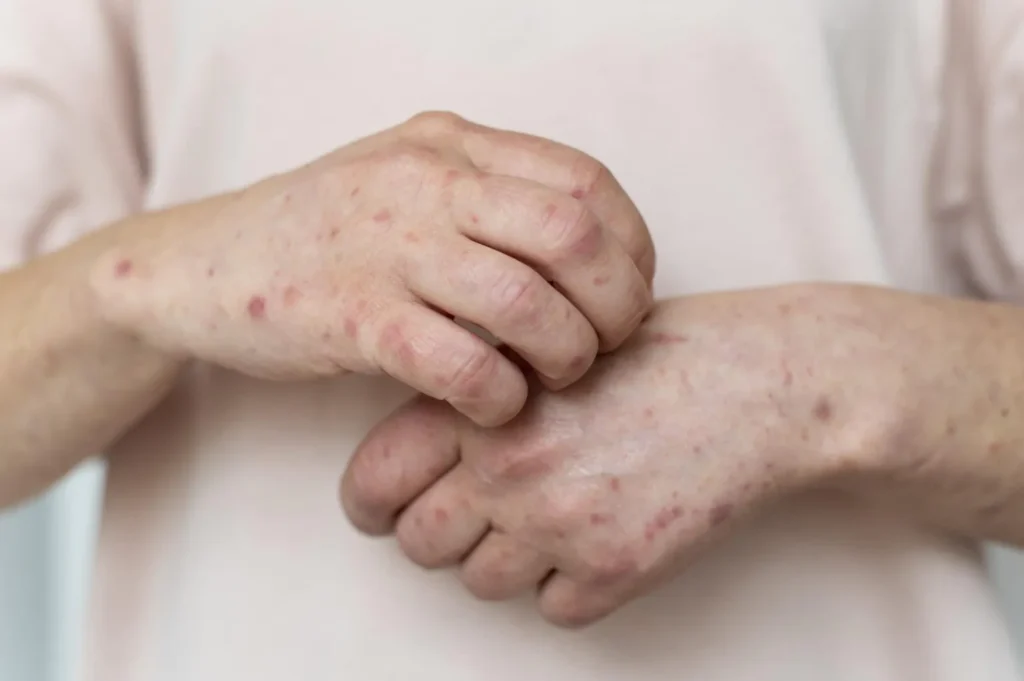
- Impetigo is a contagious skin infection which usually begins as red sores or blisters. (It can be harder to see on brown or black skin).
- Understanding the nature of an Impetigo Infection is the first step toward effective management and recovery.
- It normally appears on exposed areas of skin like your hands or around the mouth & nose.
- Eventually, these sores burst, leaving crusty, golden-brown patches.
- These patches may get bigger, spread to other parts of the body, become itchy or mildly painful.
FAQ
How do I know if the rash I have is actually impetigo?
Impetigo usually starts with red sores or small blisters that soon burst and leave behind crusty, golden‑brown patches that can look a bit like cornflakes stuck to the skin. These often appear on the face, around the nose and mouth, or on the hands. They can be itchy or a bit sore, and they spread easily. If you’re not sure, we can take a proper look during a quick clinical check and tell you whether it’s impetigo or something else.
Can I get prescription cream for impetigo directly from the pharmacy?
Yes. Our pharmacists are trained to assess and prescribe the right treatment for impetigo in people aged one year and over. If it’s suitable for your case, we can give you the right cream or other treatment the same day, so you don’t have to wait weeks for a GP appointment.
Is impetigo very contagious?
Yes, it’s very contagious. It spreads easily from skin‑to‑skin contact and through sharing towels, flannels, pillows, or toys. If you notice the patches getting bigger or spreading to new areas, it’s important to get it checked quickly. Avoid scratching the sores, and try not to share anything that touches that area until it’s treated.
Does the infection look different on different skin tones?
Yes. The redness can be harder to see on brown or black skin, so it may not look as obviously red at first. But once the blisters burst, the golden‑brown, crusty patches are usually very clear and easy to recognise, no matter your skin tone. If you’re unsure, we can take a proper look during your appointment.
What happens if the patches start to spread to other areas?
If the sores are getting bigger or appearing on new parts of the body, you should speak to us as soon as possible. We’ll review what’s happening and decide whether you need stronger treatment, like an oral antibiotic, and tell you what to look out for in the meantime.
Can children be treated for impetigo at Pottery Road Pharmacy?
Yes, we can assess and treat anyone aged one year and over. Impetigo is very common in kids and can spread quickly in school or nursery, so having a local, quick option for a check‑up is really helpful for busy parents. We’ll also explain how you can stop it spreading to siblings or classmates.
Will the treatment be a cream or a tablet?
It depends on how bad it is and where it’s on the body. For small, local patches, we usually start with a prescribed antibiotic cream you apply directly to the skin. If the rash is more widespread, painful, or not improving, we may suggest a course of tablets instead. We’ll talk you through what we think is best and why.
How long does it usually take for the patches to clear up?
With the right treatment, the sores usually stop being contagious within a few days and start to heal after a week or so. It’s important to finish the full course of cream or tablets even if it already looks better, so the infection doesn’t come back or spread.
Ready to Get Started?
Having a yellow, itchy, spreading rash on your child or on yourself can be really stressful and uncomfortable. At Pottery Road Pharmacy, we give you a fast, low‑pressure, and private check‑up so you don’t have to sit in a GP waiting room wondering what it is. Our team will look at the rash, explain what it’s likely to be, and give you the right treatment on the spot if it’s impetigo.