
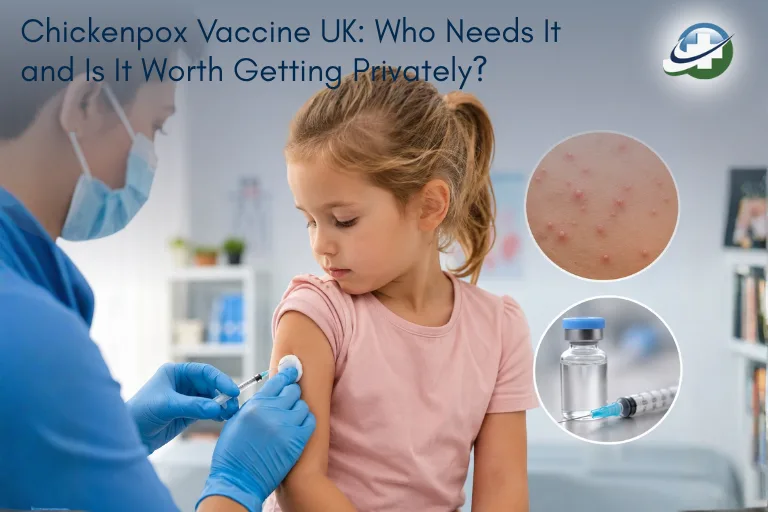
Most people in the UK catch chickenpox as a child and never think about it again. But if you missed it, or you’re an adult who’s never had it, the chickenpox vaccine UK pharmacies offer privately might be worth serious consideration. Chickenpox tends to be far milder in children than in adults, and for certain groups, catching it later in life can bring real complications. This guide walks through who actually needs the vaccine, what a private chickenpox vaccine appointment looks like, and whether it’s the right call for you or your family.
Table of Contents
- What Is the Chickenpox Vaccine and How Does It Work?
- Is the Chickenpox Vaccine Available on the NHS?
- Who Needs the Chickenpox Vaccine in the UK?
- Chickenpox Vaccine for Adults: What Makes It Different
- Private Chickenpox Vaccine: Is It Worth It?
- NHS vs Private Chickenpox Vaccine: A Quick Comparison
- Benefits of Getting Vaccinated
- Real-Life Situations Where the Vaccine Matters
- Best Practices Before and After Your Vaccine
- Common Mistakes to Avoid
- What Side Effects Should You Expect?
- Frequently Asked Questions
- Final Thoughts
What Is the Chickenpox Vaccine and How Does It Work?
The chickenpox vaccine protects against the varicella zoster virus, the same virus that causes chickenpox and, later in life, shingles. It’s a live vaccine, meaning it contains a small, weakened amount of the virus itself. This weakened form is enough to prompt your immune system to build antibodies without actually making you unwell, so if you’re ever exposed to the real virus afterward, your body already knows how to fight it off.
Because it’s a live vaccine, the course is given as two separate injections into the upper arm, spaced four to eight weeks apart. Full protection depends on completing both doses, so it’s not something you can do in a single visit.
Is the chickenpox vaccine available on the NHS?
This is where a lot of confusion comes in. Chickenpox vaccination is not part of the UK’s routine childhood immunisation schedule, unlike measles, mumps, or whooping cough. That means most people won’t be offered it automatically by their GP.
The NHS does provide it in specific circumstances, mainly for people with a genuinely higher risk profile, such as those in close, regular contact with someone who has a weakened immune system or certain healthcare workers who haven’t had chickenpox before. Outside of those narrower categories, if you want protection, you’ll usually need to arrange it privately.
Who Needs the Chickenpox Vaccine in the UK?
Not everyone needs to rush out and book an appointment. But several groups genuinely benefit from getting vaccinated.
Adults Who Never Had Chickenpox as a Child
If you grew up without catching chickenpox, and plenty of adults haven’t, you’re not automatically immune. Adults who catch chickenpox for the first time tend to get hit harder than children do, with a higher chance of complications like pneumonia or bacterial skin infections.
Women Planning a Pregnancy
Catching chickenpox during pregnancy can be risky for both mother and baby. If you’re planning to conceive and you’re not sure whether you’ve had chickenpox before, it’s worth checking your immunity and considering vaccination well before you try to get pregnant, since the vaccine itself isn’t given during pregnancy.
Healthcare Workers and Carers
Anyone working closely with patients, especially in hospitals, care homes, or clinics, has a higher chance of exposure. Non-immune healthcare workers are often specifically advised to get vaccinated to protect themselves and the vulnerable people they care for.
Close Contacts of Immunocompromised People
If you live with, or regularly care for, someone whose immune system is weakened (through illness or treatment like chemotherapy), being vaccinated yourself reduces the risk of passing the virus on to them.
Parents Considering It for Their Children
Some parents choose to vaccinate their children privately, even though it’s not routine on the NHS, simply to avoid the discomfort and time off school that chickenpox usually involves.
Chickenpox Vaccine for Adults: What Makes It Different
A chickenpox vaccine in the UK for adults follows the same two-dose structure as it does for children, but a few things are worth knowing if you’re considering it later in life.
First, protection tends to be somewhat less complete in adults than in children. Studies generally show very high long-term immunity in children who complete both doses, while adults see a slightly lower, though still substantial, rate of lasting protection. Second, adults are more likely to experience noticeable side effects at the injection site, simply because the adult immune system tends to react more robustly. Neither of these should put you off. Even partial protection, or a milder case if you do catch chickenpox after vaccination, is a meaningful improvement over no protection at all.
Before booking, a pharmacist will usually talk through your medical history, including whether you’re pregnant, planning to become pregnant soon, or have any conditions that affect your immune system, since these can affect suitability.
Private Chickenpox Vaccine UK : Is It Worth It?
Given how limited NHS access is, most adults and many parents end up looking at a private chickenpox vaccine instead. Here’s what tends to make it worthwhile.
Faster Access
You’re not waiting on an NHS referral or trying to prove eligibility criteria you might not meet. You can generally book both doses at a time that suits you.
Convenience of Local Pharmacies
Services like the chickenpox vaccine at Pottery Road Pharmacy mean you don’t need a GP appointment at all. A trained pharmacist can assess your suitability, administer the vaccine, and advise you on timing your second dose, all in one straightforward visit.
Peace of Mind for Specific Life Events
If you’re planning a pregnancy, starting a new healthcare role, or simply want to stop worrying about catching chickenpox from your own children or grandchildren, going private means you’re not stuck waiting for eligibility to change.
What to Expect at Your Appointment
A private chickenpox vaccine appointment usually starts with a short consultation to confirm you haven’t had chickenpox before (or that you’re unsure), check for any reasons the vaccine might not be suitable right now, and answer any questions. The injection itself takes moments, and you’ll typically be asked to wait briefly afterward before leaving.
NHS vs Private Chickenpox Vaccine UK : A Quick Comparison
| Factor | NHS Chickenpox Vaccine | Private Chickenpox Vaccine |
| Eligibility | Limited to specific risk groups | Open to most adults and children over 1 |
| Waiting time | Can involve referral and assessment | Usually bookable directly |
| Location | GP or specialist clinic | Local pharmacy |
| Flexibility of timing | Set by NHS availability | Chosen around your schedule |
| Suitable for general protection | Not typically offered | Yes |
Benefits of Getting Vaccinated
- Significantly lowers your risk of catching chickenpox as an adult, when symptoms tend to be more severe
- Reduces the chance of passing the virus to vulnerable people around you
- Removes the uncertainty of not knowing your immunity status
- Supports safer family planning if you’re trying to conceive
- Can reduce time off work or school if you do end up exposed later
- Offers a milder illness course even in the rare case of a breakthrough infection after vaccination
Real-Life Situations Where the Vaccine Matters
A new nurse starting hospital work: She’s never had chickenpox and her ward regularly treats immunocompromised patients. Getting vaccinated protects both her and the people in her care.
A couple planning their first pregnancy: Neither partner is sure if the female partner had chickenpox as a child. A quick chat with a pharmacist, and vaccination well ahead of trying to conceive, removes the risk entirely.
Grandparents around young grandchildren: If a grandparent never had chickenpox and spends a lot of time around young children, who are the most common carriers, vaccination reduces the chance of a nasty adult case.
A parent wanting to avoid disruption: Rather than dealing with a week or more of a contagious, itchy child at home, some parents choose to vaccinate proactively.
Best Practices Before and After Your Vaccine
- Confirm with a pharmacist whether you’ve likely had chickenpox before, since a blood test can check for immunity if you’re unsure
- Avoid booking your appointment if you currently have a fever or are unwell
- Plan your second dose in advance, ideally within the four to eight week window from your first
- Avoid close contact with pregnant women, newborns, or anyone with a weakened immune system for a short period after each dose, since it’s a live vaccine
- Keep a simple record of your vaccination dates in case you need to confirm your immunity status later, for a job, travel, or family planning
Common Mistakes to Avoid
- Assuming you’re immune without checking. Not everyone who thinks they had chickenpox actually did. A mild childhood rash isn’t always confirmed chickenpox.
- Skipping the second dose. A single dose offers weaker, less reliable protection. Both doses matter.
- Booking too close to a pregnancy attempt. Because it’s a live vaccine, timing matters. Speak to a pharmacist about the right gap before trying to conceive.
- Ignoring contact precautions after vaccination. Avoiding vulnerable people for a short window afterward isn’t optional, it’s there to prevent rare transmission of the weakened virus.
- Waiting until there’s an outbreak nearby. Immunity takes time to build after both doses, so vaccinating reactively, once you’re already exposed, is far less effective than planning ahead.
What Side Effects Should You Expect?
Most people experience mild, short-lived reactions. Soreness, redness, or slight swelling at the injection site is common and usually settles within a few days. Some people notice a mild rash or a few small spots near the injection site, a normal reaction to the weakened virus in the vaccine, not a sign anything has gone wrong. Fatigue or a slightly raised temperature can also occur but tends to pass quickly. Serious reactions are rare, and pharmacies are set up to manage them if they ever occur.
Frequently Asked Questions
- Is the chickenpox vaccine available on the NHS for everyone?
No. It’s only routinely offered on the NHS to specific risk groups, such as certain healthcare workers or close contacts of immunocompromised people. Most adults and children access it through a private chickenpox vaccine service instead. - How many doses of the chickenpox vaccine do I need?
Two doses, given four to eight weeks apart. Both are needed for full protection. - Can adults get the chickenpox vaccine even if they’re not sure they’ve had it before?
Yes. If you’re unsure, a pharmacist can talk you through your options, including checking your immunity, before you decide whether to go ahead with the chickenpox vaccine for adults. - Is it safe to get the chickenpox vaccine while pregnant?
No, it isn’t given during pregnancy. If you’re planning to conceive, it’s best to get vaccinated well in advance and speak to a pharmacist about appropriate timing. - Does the chickenpox vaccine protect against shingles too?
Not directly. The chickenpox and shingles vaccines are different, though both relate to the varicella zoster virus. If you’ve already had chickenpox and are wondering about shingles protection instead, this guide on shingles vaccine side effects in the UK is a useful next read. - Can I get the chickenpox vaccine at the same time as other vaccines, such as travel vaccinations?
In many cases, yes, though timing can depend on the specific vaccines involved. It’s worth asking your pharmacist when booking, particularly if you’re also arranging jabs through a travel vaccination service.
Final Thoughts
The chickenpox vaccine UK residents can access privately fills a real gap left by the NHS’s narrow eligibility rules. For adults who never had chickenpox, people planning a pregnancy, healthcare workers, and anyone living with someone vulnerable, it’s a straightforward way to close that gap before it becomes a problem. The two-dose course is quick, well understood, and backed by decades of use worldwide.
If you’re weighing up whether it’s right for you or your family, a short conversation with a pharmacist is the easiest way to get a clear answer. At Pottery Road Pharmacy, our team can talk you through eligibility, timing, and what to expect at each stage. You can find full details on our chickenpox vaccine page, or explore the full range of walk-in services available at our pharmacy. Ready to protect yourself or a family member? Get in touch with Pottery Road Pharmacy today to book your consultation.