
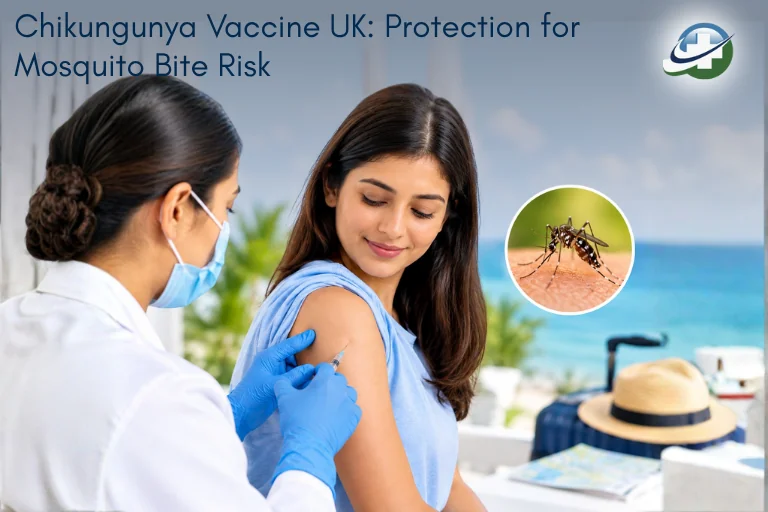
Chikungunya is a viral illness spread by mosquito bites that causes fever and severe joint pain, and it’s become an increasingly relevant consideration for travellers to tropical and subtropical regions. If you’re heading somewhere with active mosquito-borne disease risk, it’s worth knowing whether the chikungunya vaccine applies to your trip.
At a glance: Chikungunya is transmitted by the same daytime-biting mosquitoes responsible for dengue, most commonly causes fever with intense joint pain that can persist for weeks, and is best prevented through a combination of mosquito bite avoidance and, for eligible travellers, vaccination. Pottery Road Pharmacy’s Reading travel clinic can assess your individual chikungunya exposure risk as part of a wider pre-travel health review.
What Is Chikungunya and How Is It Spread?
Chikungunya is caused by a virus transmitted through the bite of infected Aedes aegypti and Aedes albopictus mosquitoes the same species responsible for spreading dengue fever. These mosquitoes bite primarily during daylight hours, particularly in the early morning and late afternoon, which means typical “avoid dusk to dawn” advice for other mosquito-borne diseases doesn’t fully apply.
The virus doesn’t spread directly from person to person. Instead, a mosquito becomes infected after biting someone carrying the virus, and can then pass it on to other people it bites. This is why chikungunya tends to cluster in areas with dense mosquito populations and limited standing-water control, including some urban and semi-urban neighbourhoods as well as rural areas.
Chikungunya has historically been most active in parts of Africa, Asia, and the Indian subcontinent, but outbreaks have also occurred in the Americas, the Caribbean, and, more recently, parts of Europe making it a growing consideration for a wider range of travel itineraries. A pre-travel health check can help clarify whether your specific destination currently carries elevated risk.
Who Should Get the Chikungunya Vaccine?
The chikungunya vaccine isn’t automatically recommended for every traveller. It tends to be most relevant for:
- Travellers heading to regions with ongoing or recent chikungunya outbreaks, where local transmission has been confirmed
- Older travellers and those with underlying health conditions, who are more likely to experience prolonged or more severe symptoms if infected
- Long-stay travellers, volunteers, and those working abroad, whose extended time in a region increases cumulative mosquito exposure
- Travellers visiting friends and relatives, who often spend more time in residential areas with greater mosquito exposure than typical tourist accommodation
As with other travel vaccines, eligibility can depend on age, health history, and how the vaccine interacts with any other vaccinations you may need for the same trip. Full details on suitability are available on our chikungunya vaccine page, or you can discuss your circumstances directly with a pharmacist.
What Are the Symptoms of Chikungunya?
Chikungunya symptoms typically begin within a few days to a week after being bitten by an infected mosquito. The name itself comes from a word meaning “to become contorted,” referring to the stooped posture some people adopt because of joint pain.
Common symptoms include:
- Sudden high fever
- Severe joint pain, often in the hands, wrists, ankles, and feet
- Muscle pain and headache
- Swelling around affected joints
- A rash, in some cases
Most people recover within one to two weeks, but joint pain can persist for weeks or even months afterwards in some cases a key difference from many other mosquito-borne illnesses. Severe complications are uncommon but tend to affect older adults, newborns, and people with existing health conditions more than others.
How to Reduce Your Risk Before and During Travel
Because chikungunya shares its mosquito vectors with dengue fever, much of the prevention advice overlaps. If you’re already researching dengue risk for a trip, it’s worth reviewing our dengue vaccine guide as a related mosquito-borne risk for the same destinations.
Before you travel:
- Book a travel health consultation at least 4–6 weeks before departure to review vaccination options and current outbreak activity at your destination
- Check whether your itinerary includes areas with recent chikungunya transmission
During your trip:
- Use DEET-based or equivalent insect repellent, reapplied regularly throughout the day
- Wear long sleeves and trousers, particularly during peak mosquito activity hours
- Use air conditioning or window and door screens where available
- Empty or cover standing water near accommodation where mosquitoes can breed
Vaccination and bite prevention work best as complementary measures rather than substitutes for one another this general approach is covered in more detail in our post on common travel health risks during summer holidays.
Frequently Asked Questions
Is chikungunya the same as dengue?
No. Chikungunya and dengue are different viruses, though they’re spread by the same mosquito species and can cause similar early symptoms like fever and joint or muscle pain. Chikungunya is more strongly associated with prolonged joint pain, while dengue carries a distinct risk of severe complications on repeat infection.
How long does chikungunya immunity from the vaccine last?
Protection duration can vary between individuals, and ongoing research continues to refine long-term guidance. A pharmacist can advise on current recommendations at the time of your consultation.
Who should avoid the chikungunya vaccine?
Certain groups including some older adults with specific health conditions, pregnant women, and those with weakened immune systems may need extra consideration before vaccination. This should always be discussed individually with a healthcare professional.
Which countries have ongoing chikungunya outbreaks?
Outbreak activity changes regularly and has occurred in parts of Africa, Asia, the Indian Ocean islands, the Americas, and more recently parts of Europe. Because risk shifts year to year, it’s best to check current advice close to your travel dates rather than relying on general destination history alone.
Check Your Chikungunya Risk Before You Travel
Chikungunya risk depends on where you’re going, how long you’re staying, and your personal health profile. At Pottery Road Pharmacy’s Reading travel clinic, our healthcare professionals can review your itinerary and advise on the chikungunya vaccine alongside any other travel vaccinations your trip may require.
Book a travel health review today to check whether your destination carries chikungunya risk.