
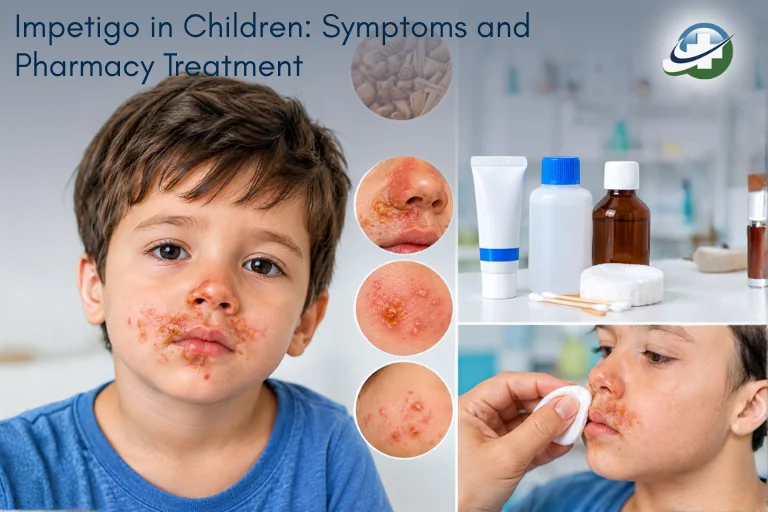
Has your child developed red sores or small blisters around their nose or mouth that burst and leave crusty, golden-brown patches that look a bit like cornflakes stuck to the skin? That’s the classic sign of impetigo, a common bacterial skin infection.
Impetigo in children is very common, especially in nursery and primary school years. It’s very contagious but not usually serious, and with treatment it often gets better within a few days. The good news for parents is that in England you don’t need to wait for a GP appointment: a pharmacist can assess and treat impetigo in children aged 1 and over through NHS Pharmacy First.
Quick Answers for Worried Parents
How contagious is impetigo? Very contagious. It spreads easily through skin-to-skin contact and by touching shared items like towels, bedding and toys. Your child stops being contagious 48 hours after starting treatment (hydrogen peroxide cream or antibiotics). Without treatment, it can stay contagious for 7 to 21 days, until all the patches have healed, dried out and crusted over.
How long until it clears? With treatment, impetigo often improves within a few days, and most children recover in about a week. Without treatment, it can take up to three weeks and is more likely to spread.
Worried your child has impetigo? Pottery Road Pharmacy in Reading offers same-day pharmacist assessment for impetigo under NHS Pharmacy First, with no GP appointment needed.
What Is Impetigo?
Impetigo is a contagious skin infection caused by bacteria, usually Staphylococcus aureus or Streptococcus pyogenes. These bacteria can live harmlessly on the skin but cause infection when they get into skin that’s already broken or irritated.
Anyone can get impetigo, but it’s much more common in young children, whose skin often has small scrapes, bites or eczema patches and who have plenty of close contact with other children.
There are two main types:
- Non-bullous impetigo: the most common type. Small sores burst quickly and leave golden-brown crusts.
- Bullous impetigo: less common. Larger fluid-filled blisters form, and yellow liquid may ooze and harden around a scab. It’s more often seen in babies and younger children and may need GP assessment.
Impetigo is usually mild, but it should still be treated. Treatment helps it clear faster and stops it spreading to siblings and classmates.
What Does Impetigo Look Like in Children?
Knowing the impetigo symptoms helps you act quickly. Signs usually develop in this order:
- Red sores or small blisters appear. The redness can be harder to see on brown and black skin.
- The sores or blisters quickly burst.
- They leave crusty, golden-brown or honey-coloured patches, often described as looking like cornflakes stuck to the skin.
- The patches may grow larger and spread to other areas of the body.
- The area can be itchy and sometimes sore.
Where it usually appears: around the nose and mouth, on the face, and on the hands. It can also appear on other exposed areas, such as arms and legs, often where there was already a small cut, scratch or insect bite.
Your child usually won’t feel unwell with impetigo. If they have a high temperature, seem unwell, or the skin around the patches becomes hot, swollen and painful, it may be a more serious skin infection, so get medical advice promptly.
Conditions That Can Look Similar
Impetigo is sometimes confused with other skin problems:
- Cold sores: blisters on or around the lips
- Eczema: itchy, dry, cracked or sore skin (impetigo can also develop on top of eczema)
- Chickenpox: itchy spots and blisters spread across the body, usually with feeling unwell
If you’re not sure what your child has, a pharmacist can take a look and advise.
What Causes Impetigo and How Does It Spread?
Impetigo Causes
Impetigo usually infects skin that’s already damaged. Common triggers in children include:
- Cuts, grazes and scratches
- Insect bites, especially when scratched
- Eczema or other itchy skin conditions
- Scabies or head lice, where scratching breaks the skin
- Cold sores
This is why impetigo often appears after a child has been scratching a bite or a dry patch of skin. If a bite looks infected rather than like impetigo, see our guide to infected insect bite treatment or our infected skin bites service.
How Impetigo Spreads
Impetigo spreads through:
- Direct skin-to-skin contact with the sores
- Shared items such as towels, flannels, bedding, clothes and toys
- Scratching, which carries bacteria to other parts of the child’s own body
That’s why it’s such a common school skin infection: close contact during play makes it easy to pass on.
How to Stop Impetigo Spreading at Home
- Keep your child off school or nursery until they’re no longer contagious
- Wash affected areas gently with soap and water and pat dry
- Wash hands often, both yours and your child’s, especially before and after applying cream
- Don’t share towels, flannels, sheets or pillowcases
- Wash bedding and towels at a high temperature
- Clean toys with detergent and warm water
- Discourage scratching or picking at sores; keeping nails short helps and reduces the risk of scarring
When Should You See a Pharmacist About Impetigo?
See a pharmacist if your child is 12 months or older and has symptoms of impetigo. Under NHS Pharmacy First, pharmacists in England can assess impetigo and, where appropriate, supply the same treatments a GP would, free on the NHS for children.
What Happens at the Pharmacy
- Assessment: the pharmacist looks at the rash in a private consultation room and asks a few questions.
- Checking it’s impetigo: they check the symptoms aren’t caused by something more serious, such as cellulitis.
- Treatment: if it’s impetigo, treatment may include hydrogen peroxide cream, an antibiotic cream, or in some cases antibiotic tablets, depending on how widespread it is.
- Advice: you’ll get guidance on applying treatment, preventing spread, and when your child can return to school.
Always finish the full course of treatment, even if the patches start to look better.
See a GP Instead If:
- Your child is under 12 months old
- Your child has a weakened immune system
- The impetigo hasn’t improved or has got worse after treatment
- Your child has had impetigo in the past year and it has come back
Impetigo is very infectious, so call your GP surgery before going in, as they may suggest a phone consultation first. If your child seems very unwell, has a high temperature, or the skin becomes hot, swollen and very painful, get urgent advice from NHS 111.
Same-Day Impetigo Treatment in Reading
For Reading parents, Pottery Road Pharmacy offers same-day pharmacist assessment for suspected impetigo through NHS Pharmacy First. There’s no need to wait days for a GP slot. You can walk in or book an appointment, and our pharmacists can assess and treat children aged 1 and over.
How Long Does Impetigo Take to Clear Up?
| With Treatment | Without Treatment | |
| Stops being contagious | 48 hours after starting treatment | 7 to 21 days, once all patches have crusted over |
| Improvement | Often within a few days | Slower, and more likely to spread |
| Full healing | Usually around 7 to 10 days | Can take up to 3 weeks |
Impetigo usually heals without scarring, especially if your child avoids scratching and picking at the crusts. Some temporary redness or skin discolouration can remain for a while after healing.
If the patches are spreading, not improving after treatment, or keep coming back, go back to your pharmacist or GP.
Frequently Asked Questions
Is impetigo contagious to other children?
Yes, impetigo is very contagious. It spreads easily through direct contact with the sores and by sharing towels, bedding, clothes or toys. Children stop being contagious 48 hours after starting treatment, or once all the patches have healed and crusted over if they’re not treated.
Should my child stay off school with impetigo?
Yes. Keep your child off school or nursery until they’re no longer contagious. That’s 48 hours after starting hydrogen peroxide cream or antibiotics, or until all the sores have dried out and crusted over if they’re not being treated. Let the school know so they can watch for other cases.
Can adults get impetigo too?
Yes. Anyone can get impetigo, although it’s most common in young children. Adults often catch it from an infected child in the household or through skin damaged by cuts, eczema or bites. Adults with impetigo can also get assessed and treated by a pharmacist.
Does impetigo always need treatment to clear up?
Impetigo can clear on its own, but it can take up to three weeks and your child stays contagious for longer. Treatment helps it heal faster, reduces the risk of spreading it to others, and lowers the chance of complications, so it’s best to get it checked by a pharmacist.
Get Your Child Checked at Pottery Road Pharmacy
Impetigo in children is common, contagious and usually easy to treat once it’s identified. Acting early means faster healing, less itching, and a quicker return to school, without waiting for a GP appointment.
Bring your child in for a quick pharmacist assessment under NHS Pharmacy First. 📍 Pottery Road Pharmacy, 2a Tylers Place, Pottery Road, Reading RG30 6BW 📞 0118 996 4203 ✉️ potteryroadpharmacy@outlook.com Book an Appointment or walk in during opening hours.