
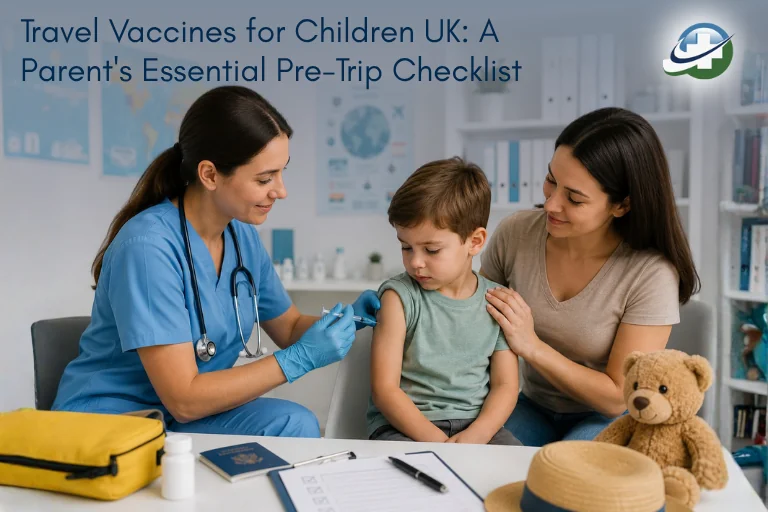
Planning a family trip abroad brings its own extra layer of preparation once children are involved, and travel vaccines are often one of the last things parents think to check — usually somewhere between packing and passports. Getting clarity early makes a real difference, both for peace of mind and for making sure your child is properly protected before you leave. This guide walks through what parents in the UK need to know about travel vaccines for children, from routine jabs to destination-specific advice.
Do Children Need Travel Vaccines?
Not every family holiday requires additional vaccinations, but children can need extra protection depending on where you’re going, how long you’re staying, and what your trip involves. The starting point for any family is always the same: confirm your child is up to date with their routine UK vaccinations, then speak to a travel clinic about whether the destination calls for anything on top of that.
Why children’s risks can differ from adults’
Children aren’t just “small adults” when it comes to travel health. Their immune systems are still developing, they’re more likely to put their hands in their mouths or drink untreated water without thinking twice, and they often spend more time outdoors — all of which can increase exposure to mosquito bites, contaminated food or water, and other travel-related illnesses. Babies and very young children may also need different vaccine doses, or may be too young for certain vaccines altogether, which is why a professional assessment matters more for families than a quick internet search.
Trips to visit friends and relatives abroad are also worth flagging specifically. These trips often involve longer stays, more rural travel, and less “tourist-controlled” food and water than a typical package holiday, which can mean a higher risk profile even if the destination itself seems familiar to the family.
Routine vaccines first
Before thinking about travel-specific vaccines, it’s worth checking your child’s routine NHS vaccination schedule is complete. NHS guidance recommends that all travellers, including children, are up to date with standard vaccinations such as measles before they go. This matters because diseases that are now rare in the UK — such as measles, mumps and rubella — remain more common in many other parts of the world, so an unvaccinated or partially vaccinated child can be at real risk even in a country that doesn’t require any additional travel vaccines. It’s also a good moment to check other childhood vaccines, such as the chickenpox vaccine, which isn’t part of the routine NHS schedule but is worth discussing before travel, particularly for younger children. If you’re not sure what your child has already had, their Red Book (personal child health record) or your GP surgery will have the details.
Which Travel Vaccines Might Children Need?
The vaccines your child may need depend entirely on your destination, itinerary and their age, but commonly considered options for family travel include:
- Hepatitis A — often considered for travel to regions where food and water hygiene standards differ from the UK
- Typhoid — similarly linked to food and water exposure in certain destinations
- Meningitis (MenACWY) — relevant for travel to certain high-risk areas, and required for Hajj and Umrah travel
- Yellow fever — required or recommended for specific countries, and only available at designated centres
- Rabies — sometimes considered for longer stays, rural travel, or families where children may be at higher risk of animal contact
- Japanese encephalitis — occasionally relevant for longer, more rural itineraries in parts of Asia
Not every child travelling to a given country needs all — or any — of these. Age, previous vaccination history, trip length and itinerary all shape the final recommendation, which is exactly why individual advice matters more than a generic checklist for a country.
How Far Before Travel Should Children Be Vaccinated?
Timing is one of the most common things parents underestimate. Some vaccines need more than one dose, spaced weeks apart, and it takes time for the body to build full immunity even after the final dose. NHS guidance suggests seeing a GP or private travel clinic at least 6 to 8 weeks before you’re due to travel wherever possible.
For families, this window is even more useful to plan around, since it gives time to:
- Fit an appointment around school terms and half-term availability
- Space out multiple vaccines if more than one is needed
- Allow for any reactions or side effects to settle well before departure
- Catch up on any missed routine vaccinations alongside travel-specific ones
Booking early doesn’t just protect your child more effectively — it also gives you far more flexibility if the assessment throws up something unexpected, like a gap in routine vaccinations you weren’t aware of.
What Should Parents Take to the Appointment?
A travel health appointment for a child tends to run more smoothly when you arrive prepared. It’s worth bringing:
- Your child’s Red Book or any other record of previous vaccinations
- Full details of your itinerary, including any rural stops or stays with relatives
- Your child’s age and, for babies, their weight (relevant for some vaccine dosing)
- Any known allergies or reactions to previous vaccines
- Details of any ongoing health conditions or medications
- A list of questions — appointments are a good opportunity to ask about anything from motion sickness to sun safety, not just vaccines
Having this ready means the appointment can focus on tailored advice rather than piecing together your child’s history from memory.
Can Children Have Travel Vaccines at a Pharmacy?
Many pharmacies with travel health services are able to vaccinate children, though this can vary by pharmacy, by vaccine, and by the child’s age — some vaccines have a minimum age requirement, and very young children or babies may sometimes be better suited to a GP or specialist travel clinic. The best approach is to check directly with your local pharmacy about which travel vaccines they can offer for your child’s age group before booking.
Pharmacy travel clinics are often a convenient option for busy families, since appointments tend to be more flexible than GP travel slots and you can usually book the whole family in together.
What If Your Child Has Missed Routine Vaccines?
It’s more common than many parents expect for a child’s vaccination schedule to have a gap — a missed appointment, an illness on the day, or simply losing track over time. This isn’t something to worry about, but it is something to flag before travel rather than after. A travel health consultation is a good opportunity to catch up on any missed routine vaccines alongside discussing travel-specific ones, so your child leaves fully protected on both fronts rather than just travel-ready.
If you’re unsure what your child has had, your GP practice can check their records and arrange any catch-up doses needed — including MMR, which is available free on the NHS at any age if a child has missed it previously.
Travel Health Checklist for Parents
Before booking flights or packing bags, run through this simple checklist:
- Check routine vaccinations — confirm your child’s Red Book or GP record shows they’re up to date.
- Check destination-specific travel advice — look at what’s recommended for the specific areas you’ll be visiting, not just the country as a whole.
- Review previous vaccination history — note any allergies, reactions or missed doses to mention at the appointment.
- Arrange professional travel health advice — book a consultation with a pharmacist, practice nurse or travel clinic rather than relying on general online guidance.
- Plan enough time before departure — aim for 6–8 weeks ahead where possible to allow for multi-dose courses and full immunity.
FAQs
What vaccines does a child need before travelling?
It depends on the destination, itinerary and your child’s age and vaccination history. Common considerations include hepatitis A, typhoid, meningitis, yellow fever and, occasionally, rabies or Japanese encephalitis — but a personal assessment is the only reliable way to know what applies to your trip.
How early should children get travel vaccines?
Ideally 6–8 weeks before departure, since some vaccines require multiple doses spaced apart and time is needed to build full immunity.
Can children get travel vaccines at a pharmacy?
Many pharmacies offering travel health services can vaccinate children, though this varies by vaccine and age. It’s best to check directly with the pharmacy when booking.
Are travel vaccines safe for children?
Travel vaccines used in the UK are given according to age-appropriate guidelines, and side effects are generally mild, such as soreness at the injection site or a short-lived temperature. A pharmacist or nurse will discuss any relevant risks based on your child’s individual health history.
What if I don’t know my child’s vaccine history?
Your GP practice can check their records, and pharmacies and travel clinics can also help identify any gaps during a travel health consultation, arranging catch-up doses where needed.
Planning family travel from Reading or elsewhere in Berkshire?
Every child’s travel health needs are different, and the safest way to plan is with an individual assessment rather than guesswork. Visit our travel clinic page to see the vaccines we offer, or get in touch with Pottery Road Pharmacy to book a travel health consultation, check your child’s routine vaccinations, and make sure your whole family is properly prepared before you go.