
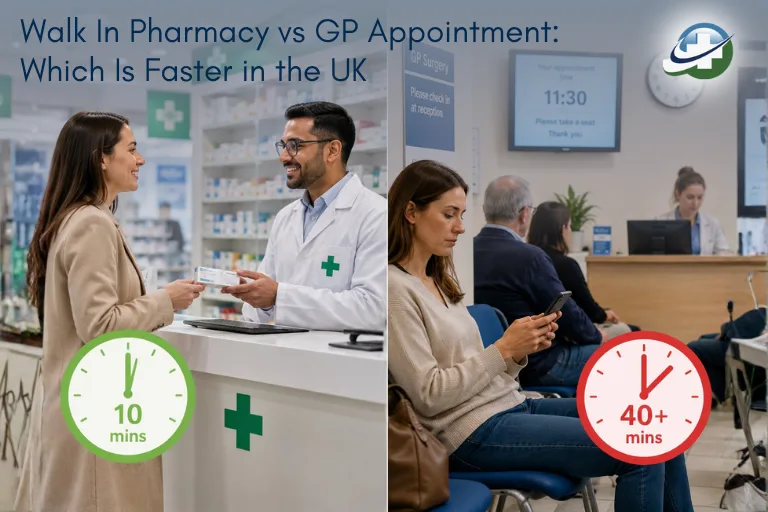
You wake up with a sore throat. Your prescription needs renewing. A rash appeared overnight. The first question most people ask is: do I call my GP or just head to a pharmacy?
In the UK right now, that question matters more than ever. GP waiting times have stretched significantly, and more patients are turning to their local walk in pharmacy as a faster, more accessible first stop for health concerns. But knowing which route to take can save you hours, sometimes days.
This guide breaks down the real difference between a walk in pharmacy consultation and a booked GP appointment, so you can make the right call for your health.
What Is a Walk In Pharmacy?
A walk in pharmacy is a community pharmacy where you can speak to a qualified pharmacist without needing a pre-booked appointment. You walk in, describe your symptoms or concern, and get professional clinical advice on the spot.
Pharmacists in the UK are regulated healthcare professionals. They complete a five-year master’s degree in pharmacy and undergo ongoing clinical training. This is not a lower level of care. It is a different, and in many cases faster, entry point into the NHS healthcare system.
At Pottery Road Pharmacy, patients can access walk in consultations for a wide range of conditions, from minor illness to prescription queries, without the wait that often comes with booking a GP slot.
What Is a GP Appointment?
A GP (General Practitioner) is a doctor who handles a broad range of health concerns and coordinates specialist care. GP appointments in the UK are booked through your registered NHS practice and are typically needed for:
- Complex or ongoing conditions
- Mental health referrals
- Specialist referrals (cardiology, dermatology, etc.)
- Diagnosis of unknown or serious symptoms
- Chronic disease management (diabetes, asthma, hypertension)
The downside is time. According to NHS data, the average wait for a GP appointment in England can range from one day for urgent cases to several weeks for routine bookings. Many patients report difficulty getting through on the phone at all.
Walk In Pharmacy vs GP Appointment: A Direct Comparison
| Factor | Walk In Pharmacy | GP Appointment |
| Booking required | No | Yes |
| Average wait time | Minutes to 1 hour | 1 day to 4+ weeks |
| Opening hours | Often extended, including weekends | Usually weekdays, limited hours |
| Prescriptions | Yes (via NHS Pharmacy First) | Yes |
| Minor illness treatment | Yes | Yes |
| Referrals to specialists | No | Yes |
| Chronic condition management | Limited | Yes |
When to Choose a Walk In Pharmacy Consultation
A walk in pharmacy consultation is usually the faster and more practical choice when your condition is common, manageable, and does not require diagnostic testing or specialist referral.
Conditions Covered by NHS Pharmacy First
In January 2024, the NHS expanded the Pharmacy First scheme across England. This means pharmacists at an authorised walk in pharmacy can now treat and prescribe for seven clinical pathways:
- Sinusitis
- Sore throat
- Earache
- Infected insect bites
- Impetigo
- Shingles
- Uncomplicated urinary tract infections (UTIs) in women
For all seven of these, you no longer need to see a GP first. You can walk in, get assessed, and walk out with a prescription if needed, often within 30 minutes.
Other Reasons to Visit a Walk In Pharmacy
Beyond Pharmacy First, a walk in pharmacy is the right stop for:
- Advice on over-the-counter medicines
- Prescription collection and queries
- Emergency contraception
- Blood pressure checks
- Flu vaccinations and travel vaccinations
- Repeat prescription requests
- Medication reviews
- Wound dressings and minor injury advice
- Guidance on managing chronic conditions between GP visits
Pottery Road Pharmacy offers all of the above and can refer patients directly to their GP or urgent care when a more serious condition is identified.
When to See a GP Instead
There are situations where a GP appointment is the right route, and trying to handle them through a walk in pharmacy consultation alone could delay important care.
See your GP if you have:
- Symptoms that have lasted more than a few weeks without explanation
- A condition that requires blood tests, scans, or specialist diagnosis
- Mental health concerns requiring therapy, psychiatric referral, or specialist medication
- A new or worsening long-term condition
- Chest pain, unexplained weight loss, or other red flag symptoms
- A need for a fit note (sick note) for work
And always call 999 or go to A&E for emergencies: difficulty breathing, chest pain, stroke symptoms, severe allergic reactions, or serious injuries.
The Real Waiting Times: What the Data Shows
NHS GP waiting times have become a significant issue for patients across England. In 2024, NHS England reported that millions of appointments each month were being handled at community pharmacies through Pharmacy First, reducing pressure on GP surgeries and cutting average patient wait times for minor conditions.
For a UTI, previously requiring a GP call, then a same-day appointment, then a prescription collected later, the whole process could take 24 to 48 hours. Through a walk in pharmacy consultation, the same patient can often receive assessment and treatment within a single visit.
For shingles, speed matters clinically. Antiviral medication is most effective when started within 72 hours of the rash appearing. A walk in pharmacy trained in Pharmacy First can prescribe antivirals directly, without the patient needing to navigate a GP appointment first.
How Pottery Road Pharmacy Can Help
Pottery Road Pharmacy is a community pharmacy providing walk in pharmacy consultations for patients in the local area. As a Pharmacy First provider, Pottery Road Pharmacy can assess and treat all seven NHS clinical pathways without a GP referral.
The pharmacy offers:
- Walk in consultations, no appointment needed
- Private consultation rooms for confidential advice
- NHS Pharmacy First services
- Prescription services including urgent and repeat prescriptions
- Vaccinations and health checks
- Medication reviews and medicines optimisation
Pottery Road Pharmacy is staffed by qualified, registered pharmacists who work as part of your local NHS healthcare network. If your condition requires GP input, the team will refer you appropriately rather than leaving you to navigate the system alone.
Frequently Asked Questions
Can a pharmacist prescribe medication in the UK?
Yes. Under the NHS Pharmacy First scheme, trained community pharmacists can prescribe medication for seven common conditions without you needing to see a GP first. These include UTIs, shingles, sore throat, sinusitis, earache, infected insect bites, and impetigo.
How long does a walk in pharmacy consultation take?
Most walk in pharmacy consultations at community pharmacies take between 10 and 30 minutes depending on complexity. No appointment is needed, so your total time from walking in to walking out is typically under an hour.
Is a walk in pharmacy consultation free on the NHS?
Yes. NHS Pharmacy First consultations are free to all eligible patients in England. You pay standard prescription charges for any medication issued unless you are exempt from charges.
Can I get a prescription at a pharmacy without seeing a GP?
Yes, for conditions covered by Pharmacy First. For other conditions, you still need a GP prescription unless you see a private prescriber. Pharmacists can also recommend over-the-counter treatments that do not require a prescription at all.
What should I do if I cannot get a GP appointment quickly?
For minor illness, a walk in pharmacy is your fastest option. Pharmacy First covers many of the conditions people book urgent GP appointments for. If your symptoms are more serious, contact your GP practice for an urgent telephone triage, or call 111 for NHS urgent care advice.
Is Pottery Road Pharmacy a Pharmacy First provider?
Yes. Pottery Road Pharmacy is registered with NHS England to provide Pharmacy First consultations. You can walk in for treatment of eligible conditions without a GP referral.
Can a pharmacy help with repeat prescriptions?
Yes. Pottery Road Pharmacy can process repeat prescriptions and liaise with your GP surgery on your behalf. This saves you the step of visiting or calling your GP practice for a routine renewal.
What is the difference between a pharmacist and a GP?
Both are qualified healthcare professionals. A GP is a doctor trained to diagnose and manage a wide range of medical conditions including complex and long-term illness. A pharmacist specialises in medicines and is trained to assess, advise on, and in many cases treat common conditions. For minor illness and medicines-related queries, a pharmacist is often the faster and equally effective option.
Are walk in pharmacy services available on weekends?
Many community pharmacies including Pottery Road Pharmacy offer extended opening hours including Saturdays. Check directly with the pharmacy for specific weekend availability.
Can children use walk in pharmacy consultations?
Yes. Pharmacists can provide consultations and advice for children. Pharmacy First covers conditions such as earache in children. For very young infants or symptoms that concern you significantly, your GP or 111 may be the better first call.
Visit Pottery Road Pharmacy Today
You do not always need to wait days for a GP appointment to get the help you need. For common conditions, prescription queries, and minor illness, a walk in pharmacy consultation is faster, free, and right on your doorstep.
Pottery Road Pharmacy is open for walk in consultations. No appointment needed.
Come in and speak to one of our qualified pharmacists. Whether you need a Pharmacy First assessment, a prescription, a vaccination, or just clear advice on the right treatment, we are here to help.